

Hebrew Teachers Colleges in the United States

The past thirty years has seen a radical reshaping of Hebrew Teachers Colleges and teacher training programs in Jewish education in the United States. Many of these institutions have closed, merged into larger local universities or expanded their focus and programs. Financial stability and viability became a major contributing factor to the decline of these historic and storied institutions. On the other hand, millions of dollars have been poured into the funding of graduate students going into Jewish education, hopefully levelling the playing field between men and women. While Jewish classroom teaching has always been the preserve of women, leadership positions in schools, universities, and even rabbinical schools have welcomed women into their ranks during the opening decades of the twenty-first century.
Introduction
The past thirty years have seen a radical reshaping of Hebrew Teachers Colleges and teacher training programs in Jewish education in the United States. Many of these institutions have closed, merged into larger local universities, or expanded their focus and programs. Financial stability and viability became a major contributing factor to the decline of these historic and storied institutions. Many of the Hebrew Teachers Colleges had depended on the local Jewish federations for the bulk of their funding, and as the amount of that funding decreased and the cost of maintaining both salaries and physical structures increased, it became impossible to sustain them. Unlike major universities with a diverse base of alumni, Hebrew Teachers Colleges have a rather narrow base of alumni of modest means who could not be depended upon to provide the necessary financial support. The proliferation of on-line programs in the second decade of the twenty-first century allowed for greater flexibility in scheduling and geographical location. A student in the United Kingdom can take a morning class on the East Coast of the United States while on a lunch break. The Covid pandemic that began in the winter of 2020 furthered the trend towards online learning, as most institutions of higher learning became exclusively online.
While many institutions have faced several financial challenges, funding for individual students to pursue graduate studies in Jewish education has increased tremendously since the beginning of the twenty-first century. A 2017 investigation commissioned by the Association of Institutions of Higher Learning in Jewish Education (ALOHA), spearheaded by Rabbi Michael Shire, indicated tremendous growth in both full- and part-time students undertaking graduate degree programs in Jewish education. The report surmises that most part-time students are already working in Jewish educational settings (about 50% in day schools) and that these students receive substantial funding to further their education. Though the majority of all master’s students attend part time, full-time enrollment increased by 80% during the 2014-2015 academic year (Shire, 6). Between 2005 and 2015, 86% of graduating students received funding worth at least 50% of tuition (Shire, 9). The study does not break down students by gender, but most of those in Jewish classrooms are female identified. These millions of dollars spent on teacher training should level the playing field and help achieve gender parity in teacher education outcomes.
While women have garnered more positions of leadership in Hebrew Teachers Colleges and their successor institutions since the latter decades of the twentieth century, the lens through which gender and gender equity are viewed also changed. Second-wave feminism emerged in the 1960s, followed by radical feminism in the 1970s. The late twentieth and early twenty-first centuries saw the expansion of ideas of gender that go beyond male and female. The Jewish community also realized that gender and gender equity had to be seen through the lens of gender non-binary and gender non-conforming identities, and positions of educational leadership in the Jewish community also must be viewed in that light. These issues and others were raised in a seminal study entitled Gender Equity and Leadership Initiative, by Drs. Shira D. Epstein and Andrea Jacobs and published by JTS in 2019.
Early History: Nineteenth Century through World War I

field_section_text_value
The Interwar Period through the 1950s
field_section_text_value
The Late Twentieth and Early Twenty-First Centuries

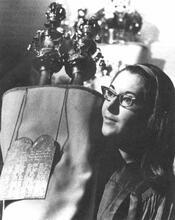
Sara Lee transformed Jewish schools and education.
Courtesy of Hebrew Union College
field_section_text_value
Conclusion
In the twenty-first century, Jewish women have made great strides both as leaders of Jewish teacher training institutions and as heads of major Jewish educational establishments.
The traditional Hebrew Colleges founded in the early twentieth century have closed, been absorbed by other institutions, or expanded their missions. As noted above, the Baltimore Hebrew College is now the Baltimore Hebrew Institute at Towson University, and the Cleveland College of Jewish Studies is now an adult education institute known as the Laura and Alvin Siegal Lifelong Learning Program at Case Western Reserve University. The Boston Hebrew College’s crown jewel is its rabbinical school, and Gratz College in Philadelphia now grants graduate degrees and certificate programs beyond training teachers in the field of Jewish education. The major seminaries continue to run traditional Jewish teacher training programs and have expanded their offerings to meet the needs of twenty-first-century professionals. Most of these schools are currently headed by women, and the breakthrough in the stained-glass ceiling was the appointment of Dr. Shuly Rubin Schwartz as Chancellor of The Jewish Theological Seminary in 2020.
When this encyclopedia was first compiled in the 1990s, it was a rarity for a woman to be the head of school at a major Jewish day school in the United States. Those days are gone. Dr. Shulamith Reich Elster (1939-2021), the original author of this article, served as head of school of the Charles E. Smith Jewish Day School in Rockville, MD, from 1982 to 1990, and Dr. Joyce Raynor (subsequently ordained by JTS while head of school) served as head of school at the Golda Och Academy in West Orange, NJ, from 2007 to 2015. Both women started at their respective schools many years before being appointed head, which may show that in previous years women had to “show their mettle” before they could ascend the top ranks. More recently, other women who have reached the pinnacle of Jewish education have come from outside the ranks of Jewish teacher training programs. Ariela Dubler, for example, was appointed head of the prestigious Abraham Joshua Heschel Jewish Day School in Manhattan, having bypassed any training in formal Jewish education; instead, she came from a tenured position on the faculty of the Columbia University School of Law.
While some women have achieved the top positions that served as the traditional measure of success in the field, however, important questions and challenges remain. Being head of school, with all of its pressures and strains, is no longer the only measure of success for women; women may take alternate paths to leadership and success in the field of Jewish education. Moreover, a survey of the graduates of prestigious training programs, indicates that the salary gap, the prestige gap, and the job satisfaction gap between men and women remain substantial (Epstein and Jacobs). And perhaps most importantly, how are the questions educators ask different now that women have significant leadership roles? In institutions that profess to be egalitarian, why are both boys and girls taught about wearing tallit and tefillin but only boys are required to wear them? These questions will continue to change as understandings of gender continue to evolve.
Davidson, Aryeh. The Preparation of Jewish Educators in North America: A Status Report to the Commission on Jewish Education in North America. Commission on Jewish Education in North America, 1990.
Dushkin, Alexander M., with Nathan Greenbaum. Comparative Study of the Jewish Teachers Training Schools in the Diaspora. Jerusalem: Institute of Contemporary Jewry, Hebrew University, 1970.
Epstein, Shira D. and Jacobs, Andrea. Gender Equity and Leadership Initiative: A Research and Planning Task Force of the Leadership Commons. New York: William David Graduate School of Jewish Education, JTS, Spring 2019.
Janowsky, Oscar J., ed. The Education of American Jewish Teachers. Boston: Beacon Press, 1967.
King, Diane A. “A History of Gratz College 1893–1928.” Ph.D. diss., Dropsie College, 1979.
Margolis, Isidor. Jewish Teacher Training Schools in the United States. National Council for Torah Education of Mizrachi-Hapoel Hamizrachi, 1964.
Reimer, Joseph, ed. To Build a Profession: Careers in Jewish Education. Waltham, MA: Brandeis University Press, 1987.
Schiff, Alvin. “New Models in Preparing Personnel for Jewish Education: Overview of Programs.” Jewish Education 43, no. 3 (Fall 1974).
Shire, Michael (Chairman). State of Graduate Jewish Education in the United States, Association of Institutions of Higher Learning in Jewish Education (ALOHA), November 2017.
Steiner, M.J. “Hebrew Teachers College of Boston: 1921–1951.” Jewish Education 23, no. 1 (Winter 1952).
More Like This

Double your impact to amplify Jewish women’s stories—
All gifts matched up to $35,000
Before you close this article, please consider supporting the Jewish Women’s Archive and uplifting Jewish women’s voices.
At JWA, we preserve the voices of Jewish women and gender-expansive people past and present, share them freely with millions online, and empower a new generation of Jewish feminists to lead with courage, creativity, and conviction.
But none of this happens without you. JWA is an independent nonprofit— we rely on people, like you, who believe that history belongs to all of us and that the voices of Jewish women must remain powerful, and heard.
This month, a generous JWA board member will match every gift dollar for dollar—up to $35,000—through June 30. Your contribution goes twice as far right now.
Every contribution—no matter the size—helps us document, teach, and inspire through Jewish women’s stories.
It takes less than a minute to make a difference.
Thank you for being a part of the JWA community,

Judith Rosenbaum, CEO