

Amy Eilberg

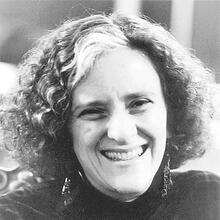
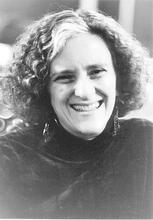
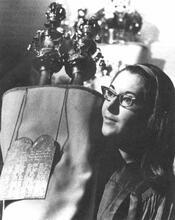
Amy Eilberg was the first woman ordained as a rabbi by the Conservative movement, in 1985. Her ordination was the culmination of years of advocacy by Jewish feminists, and vigorous, and often contentious, debate. Early on Eilberg recognized her affinity for chaplaincy work and focused on Jewish healing and consolation, pursuing a rabbinic path outside of a congregational setting. Over the years she expanded her areas of interest, serving as a spiritual director, kindness coach, and peace and justice educator. Eilberg is involved in interfaith social justice work and is a supporter of T’ruah: The Rabbinic Call for Human Rights. She is a contributing author to numerous works related to Jewish approaches to healing and is the author of From Enemy to Friend: Jewish Wisdom and the Pursuit of Peace.
First Female Conservative Rabbi
field_section_text_value
The Road to the Rabbinate
field_section_text_value
A Multi-Faceted Career
Eilberg started her career as a chaplain at Methodist Hospital in Indianapolis, and then became the assistant rabbi at Har Zion Temple in suburban Philadelphia. After stepping down from that position in 1989, in part to spend more time with her toddler, she realized that her true passion was for chaplaincy work. She worked for a year at a Philadelphia-based Jewish hospice, and then helped to cofound the Bay Area Jewish Healing Center in San Francisco, with which she was affiliated through 1996—devoting her energy to exploring Jewish ways of healing and helping the dying and bereaved. In the ensuing years, Eilberg worked nationally as a teacher, trainer, and writer on issues related to Jewish healing, hospice, and spirituality; in 1998 she helped create a post-abortion ritual.
Around the year 2000, Eilberg was drawn to the practice of spiritual direction, a contemplative listening practice through which directors provide a safe space for seekers to explore the sacred in their lives. With origins in Roman Catholic practice, it has more recently been adapted for use in the Jewish community. In her home of Palo Alto, CA, as a Jewish Spiritual Director and a founding co-director of the Yedidya Center for Jewish Spiritual Direction, she helps individuals seeking to deepen their spiritual lives. From 2002 to 2006 she co-directed the Morei Derekh Training Program for Jewish Spiritual Directors.
An early encounter in 2004 with Neve Shalom/Wahat al-Salaam, an Israeli-Palestinian dialogue center, inspired Eilberg to dedicate her efforts to the cause of peace through interfaith work and intra-Jewish dialogue. This led to the publication of a book on the topic of Jewish civil discourse, From Enemy to Friend: Jewish Wisdom and the Pursuit of Peace, in which she explores dialogue, conflict resolution, and peacemaking from the perspective of Jewish texts and tradition.
Eilberg has also directed her efforts toward social justice issues and has served as the Coordinator of Jewish Engagement for Faith in Action Bay Area. She currently serves as a teacher and lecturer on social justice, civil discourse, and spiritual development, and as a kindness coach. She was granted a Doctor of Ministry degree from United Theological Seminary of the Twin Cities in 2016.
In 1996 Eilberg married Louis Newman, a professor of religion and Judaic Studies from St. Paul, MN. Eilberg had previously been married to Howard Schwartz. She has one daughter, Penina, from her first marriage (b. 1986), and two stepsons, Etan (b. 1986) and Jonah (b. 1989).
Women in the Rabbinate
For some, the decision of the Conservative movement to ordain women was symbolic of a new era of gender equality, and thus an understanding that men and women should not be perceived as different based upon their sex. Eilberg, however, opposes the type of gender neutrality that blinds the movement’s leadership to the particular challenges that are still faced by women rabbis. Her hope is that instead of effacing the differences between men and women, the Conservative movement will “recognize the different needs of women rabbis.” Her commitment to valuing gender difference has been a prominent theme throughout her rabbinical career. Not surprisingly, when she delivered her senior sermon at JTS, the first ever given by a woman, she found her own views echoed in the lines of Exodus, describing the unique contributions that women brought to the Tent of Meeting (Exodus 35:22-29). Eilberg believes that as a woman she too brings unique gifts to Judaism.
Selected Works
“Kol Isha: A New Voice in Conservative Judaism.” In The Seminary at 100, eds. Nina Beth Cardin and David Wolf Silverman. New York: United Synagogue of Conservative Judaism, 1987.
“I Must Keep Singing: Psalm 137.” In Healing of Spirit, Healing of Body, ed. Simkha Weintraub. Woodstock, VT: Jewish Lights, 1994.
“A Grieving Ritual Following Miscarriage.” In Lifecycles: Jewish Women on Life Passages and Personal Milestones, ed. Debra Orenstein. Woodstock, VT: Jewish Lights, 1994.
“Walking in the Valley of the Shadow: Caring for the Dying and Their Loved Ones.” In Jewish Pastoral Care, ed. Dayle Friedman. Woodstock, VT: Jewish Lights, 2001.
From Enemy to Friend: Jewish Wisdom and the Pursuit of Peace, Maryknoll, NY: Orbis Books, 2013.
Amy Eilberg Website. Accessed June 28, 2020. https.//www.rabbiamyeilberg.com/.
Cantor, Aviva. “Rabbi Eilberg.” Ms. (December 1985): 45-46.
Eilberg, Amy. From Enemy to Friend: Jewish Wisdom and the Pursuit of Peace, Maryknoll, NY: Orbis Books, 2013.
Eilberg, Amy. Personal correspondence with Helene Herman Krupnick, June and July 2020.
Goldman, Ari. “Conservative Assembly Votes to Admit Women as Rabbis.” New York Times. February 14, 1985: Section A, p. 1.
Goldman, Ari. “Ten-Year Dream of Being a Rabbi Coming True for a Woman.” February 17, 1985: Section 1, p. 40.
Goldman, Ari. “Conservative Jews Ordain Woman.” New York Times. May 13, 1985: Section B, p. 3.
Katz, Raye T. “Exploring the Link between Womanhood and the Rabbinate: Lilith Interviews the First Woman Ordained in the Conservative Movement.” Lilith. 14 (1985-86): 20-21.
Mono, Brian. “Women Rabbis Take Stock.” Jewish Exponent. 207 (March 23, 2000): 1.
Nadell, Pamela. Women Who Would Be Rabbis. Boston: Beacon Press, 1998.
Tucker, Gordon. “On the Ordination of Women as Rabbis.” In The Ordination of Women as Rabbis: Studies and Responsa, ed. Simon Greenberg. New York: Jewish Theological Seminary of America, 1988.
Wenger, Beth. “The Politics of Women’s Ordination: Jewish Law, Institutional Power and Debate over Women in the Rabbinate.” In Tradition Renewed: A History of the Jewish Theological Seminary, vol 2. ed. Jack Wertheimer. New York: Jewish Theological Seminary of America, 1997.
More on Amy Eilberg
Double your impact to amplify Jewish women’s stories—
All gifts matched up to $35,000
Before you close this article, please consider supporting the Jewish Women’s Archive and uplifting Jewish women’s voices.
At JWA, we preserve the voices of Jewish women and gender-expansive people past and present, share them freely with millions online, and empower a new generation of Jewish feminists to lead with courage, creativity, and conviction.
But none of this happens without you. JWA is an independent nonprofit— we rely on people, like you, who believe that history belongs to all of us and that the voices of Jewish women must remain powerful, and heard.
This month, a generous JWA board member will match every gift dollar for dollar—up to $35,000—through June 30. Your contribution goes twice as far right now.
Every contribution—no matter the size—helps us document, teach, and inspire through Jewish women’s stories.
It takes less than a minute to make a difference.
Thank you for being a part of the JWA community,

Judith Rosenbaum, CEO

