

Natalie Zemon Davis

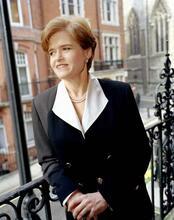
Natalie Zemon Davis was a foremost historian of early modern Europe. Her first works focused on France, plumbing the archives for records that elucidate the lives of ordinary people, especially marginalized groups and women. She is best known for The Return of Martin Guerre (1983), a work that uncovered the case of a sixteenth-century imposter and was later made into a highly acclaimed film. Davis’s later scholarship focused on the daily interactions of Christians, Jews, and Muslims and on slaves and slaveholders, with a particular interest in their social encounters and cultural exchanges. She is known for traversing disciplinary boundaries and employing innovative research methodologies.
Natalie Zemon Davis was a leading historian of early modern Europe, a pioneer in feminist studies, and one of the first women to assume a senior position in academic life. In 1987, when she served as president of the American Historical Association, the largest professional organization of historians in the United States, she became only the second woman ever to hold that post. Davis’s work enriched historical understanding by challenging the boundaries of scholarly inquiry and broadening the scope of the historical profession.
Family and Education
Davis grew up in a middle-class Jewish family in Detroit, Michigan. She attended the Kingswood School for Girls, where she was one of only a few Jewish students. Her interest in history, as well as her leftist political allegiances, began to develop in high school and grew stronger in her college years. As a student at Smith College in the late 1940s, Davis participated in several political organizations, ranging from Marxist discussion groups to campaigns against racial discrimination. At the same time, as an honor student at Smith, she began to nurture her passion for historical research.
While still in college, Natalie Zemon married Chandler Davis, then a graduate student in mathematics. After completing college in 1949, she began her graduate studies at Harvard University, where she pursued social and cultural history and learned the fundamentals of archival research, earning a master’s degree from Radcliffe College in 1950. She continued her graduate work at the University of Michigan, while her husband accepted a position on the faculty; she received her Ph.D. in 1959.
Davis began her teaching career at Brown University (1959–1963) and has held faculty positions at the University of Toronto (1963–1971) and the University of California at Berkeley (1971–1977). She joined the faculty of Princeton University in 1978, where she was the Henry Charles Lea professor of history from 1981 until her retirement in 1996. Davis was the Northrop Frye Professor of Literary Theory at the University of Toronto in the fall of 1996 and has served there since as Adjunct Professor of History and Anthropology and Professor of Medieval Studies.
Political Activities
Natalie and Chandler Davis remained politically active, and both suffered the repercussions of the 1950s anticommunist backlash. Chandler Davis refused to sign the university’s required anticommunist oath, and in 1953 he was brought to testify before the House Un-American Activities Committee. His refusal to cooperate in the government witch-hunts resulted in his being dismissed from the faculty, blacklisted within the profession, and briefly imprisoned. Shortly before her husband’s firing, Davis had spent several months in France, a period she described as initiating her “lifelong love affair with the archives.” After returning from Europe, the government confiscated both the Davises’ passports, making it impossible for her to continue any research abroad. Forced by circumstance to revamp her research agenda, Davis turned her attention to rare book collections in the United States. Throughout her career, Davis continually broadened the intellectual scope of her work, examining the categories of class, gender, and religion, and employing the methodological tools of history, anthropology, and literature within her scholarly repertoire.
Scholarship
field_section_text_value
Influencing the Profession
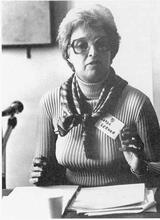
Davis always displayed a strong interest in the political and professional dimensions of the historical enterprise. As a young professor at the University of Toronto and the mother of three children, she pressed the university to make provisions for child care and recognize the needs of female employees and graduate students. At the University of Toronto and at Berkeley, Davis helped to create the first women’s history courses on campus. She played a leading role in creating women’s studies programs at both Berkeley and Princeton.
She was also vocal about the need for historians to conceive their work broadly, not as part of an enclosed professional discourse. In her 1987 presidential address to the American Historical Association, she advanced the notion of history as dialogue. “My image of history would have at least two bodies in it,” she explained, “at least two persons talking, arguing, always listening to the other as they gestured at their books.”
While Davis’s work did not centered primarily on Jewish issues, both Jewish culture and Jewish historical actors were a regular and often featured aspect of her scholarship. She declared her goal to “transform European history through the inclusion of Jewish history.” She also cited her Jewish background as a factor shaping her identity as a historian. She recalled that feelings of being an outsider in the majority culture prompted her curiosity about social construction and identity. As a Jew and a woman, Davis gravitated toward exposing and bringing to life the histories of those groups often suppressed in traditional historical narratives.
Davis received many honors for her work. She received the Holberg International Memorial Prize in 2010 and two years later was named Companion of the Order of Canada, the highest class within the order. She was awarded the 2012 National Humanities Medal, presented by President Barack Obama, for “her insights into the study of history and her exacting eloquence in bringing the past into focus.” In 2019, to mark her 90th birthday, Princeton University hosted a day-long workshop celebrating her scholarship and contributions to the historical profession.
Natalie Davis emerged as one of the foremost historians of her time. Her scholarship and intellectual creativity expanded the scope of historical inquiry, elicited new types of questions, and prodded the limits of research methodology. Her work enhanced the study of gender, class, culture, religion, art, and literature and helped to place all of those categories under the broad rubric of history. In addition to her many contributions to the historical profession, she wrote in an accessible style and addressed contemporary issues, giving her ideas a wide audience beyond the limited realm of historians.
Natalie Zemon Davis died on October 21, 2023.
Selected Honorary Degrees and Prizes
• Honorary Degree, The Hebrew University of Jerusalem 2000
• Toynbee Prize 2000
• Fellow of Early Modern Studies, Sixteenth Century Studies Conference 1998
• Honorary Degree, University of Edinburgh 1998
• Honorary Degree, University of Cambridge 1998
• Honorary Degree, Universität College 1998
• Smith College Medal 1996
• Honorary Degree, Harvard University 1996
• Corresponding Fellow, The British Academy 1995
• Eugene Asher Distinguished Teaching Award, American Historical Association 1994
• MA by special resolution of Congregation, University of Oxford 1994
• Honorary Degree, Dartmouth College 1994
• Honorary Degree, University of Massachusetts at Lowell 1994
• Honorary Degree, University of Pennsylvania 1992
• Honorary Degree, University of Chicago 1992
• Honorary Degree, University of Toronto 1991
• Honorary Degree, Columbia University 1990
• Honorary Degree, Colby College 1990
• Honorary Degree, Goucher College 1989
• Honorary Degree, New School for Social Research 1989
• Honorary Degree, Muhlenberg College 1989
• Honorary Degree, Reed College 1988
• Honorary Degree, Tufts University 1987
• Honorary Degree, George Washington University 1987
• Honorary Degree, Williams College 1987
• Honorary Degree, The University of Rochester 1986
• Honorary Degree, Lawrence University 1984
• Honorary Degree, Wesleyan University 1984
• Honorary Degree, Universite de Lyon II 1983
• Radcliffe Graduate Society Medal for Distinguished Achievement 1983
• Howard T. Berhman Award for Distinguished Achievement in the Humanities at Princeton 1983
• Honorary Degree, Northwestern University 1983
• Fellow, American Academy of Arts and Sciences 1979
• Honorary Degree, Smith College 1977
• Chevalier, l'Ordre des Palmes Académiques 1976
SELECTED WORKS BY NATALIE ZEMON DAVIS
Society and Culture in Early Modern France: Eight Essays. Stanford, CA: Stanford University Press, 1975.
Le retour de Martin Guerre, Laffont (Paris, France), 1982, translated and published as The Return of Martin Guerre. Cambridge: Harvard University Press, , 1983.
(Translator) Frauen und Gesellschaft am Beginn der Neuzeit. Berlin: Wagenbach, 1986.
Fiction in the Archives: Pardon Tales and Their Tellers in Sixteenth-Century France. Stanford, CA: Stanford University Press, 1987.
(Editor, with Arlette Farge) A History of Women, Volume 3: Renaissance and Enlightenment Paradoxes. Cambridge: Harvard University Press, 1993.
Women on the Margins: Three Seventeenth-Century Lives. Cambridge: Harvard University Press, 1995.
(Translator) Lebensgänge. Berlin: Wagenbach, 1998.
Slaves on Screen: Film and Historical Vision. Cambridge: Harvard University Press, 2000.
The Gift in Sixteenth-Century France. Madison, WI: University of Wisconsin Press, 2000.
L'histoire tout feu tout flamme. Paris: Albin Michel, 2004.
Trickster Travels: A Sixteenth-Century Muslim between Worlds. New York: Hill and Wang, 2006.
Creager, Angela N. H and Trivellato, Francesca, eds. “Natalie Zemon Davis: A Celebration of Her 90th Birthday” H-France Salon. volume 11, issue 15 (2019). Accessed July 2, 2020. https://h-france.net/h-france-salon-volume-11-2019/#1115.
Davis, Natalie Zemon and Denis Crouzet. A Passion for History: Natalie Zemon Davis, Conversations with Denis Crouzet (Early Modern Studies, 4), ed. Michael Wolfe. Kirksville, MO: Truman State University Press, 2010.
Diefendorf, Barbara B., and Carla Hesse, eds. Culture and Identity in Early Modern Europe (1500–1800): Essays in Honor of Natalie Zemon Davis. Ann Arbor, MI: University of Michigan Press, 1993.
Natalie Zemon Davis, National Humanities Medal, 2012. Accessed July 2, 2020. https://www.neh.gov/about/awards/national-humanities-medals/natalie-zemon-davis
“Natalie Zemon Davis.” In Visions of History: Interviews with E.P. Thompson ... by Marho, edited by Henry Abelov et al. Manchester: Manchester University Press, 1983.
Le Retour de Martin Guerre [The Return of Martin Guerre]. Daniel Vigne, director. Société française de production cinématographique, producer. Paris, May 1982. New York, June 1983.
Peters, Diane. “Becoming Natalie Davis.” University Affairs. November 5. 2014. Accessed June 25, 2020. https://www.universityaffairs.ca/features/feature-article/becoming-natalie-davis/


Double your impact to amplify Jewish women’s stories—
All gifts matched up to $35,000
Before you close this article, please consider supporting the Jewish Women’s Archive and uplifting Jewish women’s voices.
At JWA, we preserve the voices of Jewish women and gender-expansive people past and present, share them freely with millions online, and empower a new generation of Jewish feminists to lead with courage, creativity, and conviction.
But none of this happens without you. JWA is an independent nonprofit— we rely on people, like you, who believe that history belongs to all of us and that the voices of Jewish women must remain powerful, and heard.
This month, a generous JWA board member will match every gift dollar for dollar—up to $35,000—through June 30. Your contribution goes twice as far right now.
Every contribution—no matter the size—helps us document, teach, and inspire through Jewish women’s stories.
It takes less than a minute to make a difference.
Thank you for being a part of the JWA community,
Judith Rosenbaum, CEO