
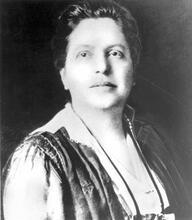
Rita Arditti

Feminist, educator, and activist Rita Arditti received a doctorate in biology at the University of Rome, spent ten years doing lab science, and then changed careers to teach interdisciplinary studies. Science and Liberation, Test-Tube Women: What Future for Motherhood and Searching for Life: The Grandmothers of Plaza de Mayo and the Disappeared Children of Argentina are her best-known publications. Her writings about her experience growing up Sephardic in an Ashkenazi-dominant Jewish community have helped readers understand Sephardic experience. She lived for over 30 years with metastatic breast cancer and wrote that story too. The struggle of the Grandmothers of Plaza de Mayo to find their missing grandchildren led Arditti to educate others about what happened in Argentina.
Early Life and Family
Rita Arditti’s parents, Jacques Arditti and Rosa Cordovero, immigrated separately from Turkey to Argentina. They met in Buenos Aires in the early twentieth century, where they married and had three daughters: Edith, Rita, and Alicia. Jacques Arditti was a businessman who traveled widely and spoke many languages: Rosa Cordovero managed the family. One of her grandmothers lived with them and all the adults spoke Ladino, erroneously imagining the children could not understand them.
Arditti’s mother lit candles on Shabbat and her extended close-knit Sephardic family gathered on high holidays, but Rita was not religious. She was, however, very aware of her Jewish identity. Having an Italian-sounding last name meant some of Arditti’s schoolmates assumed she was Catholic, and some felt free to make antisemitic comments. As a result, Arditti made a commitment as a young person always to let people know she was Jewish.
Arditti attended public elementary school where, one year, as the student with the highest grades, she was honored to carry the national flag during a visit by Evita Peron, who touched her on the head. (She was afraid to mention that to her parents.) She convinced her father to let her to attend a private bilingual (English-Spanish) Methodist-run high school. Arditti loved the school and spoke warmly of it throughout her life. Her academic proficiency earned her admission to Barnard College, where she spent one year, followed by her studies in biology at the University of Rome.
Piano lessons were an important part of Arditti’s childhood and she excelled. At seventeen, she played a live performance of a Bach piano concerto with the Buenos Aires Radio Symphony Orchestra. Her teacher hoped that she would become a concert pianist, but that experience convinced Arditti that she did not want the life of a performer. She played piano for her own pleasure for the rest of her life.
Early Adult Years: Emerging Activism
In 1965 Arditti emigrated to the United States from Buenos Aires, via Rome, to do research, first at Brandeis University and then in the laboratory of Dr. Jonathan Beckwith at Harvard University Medical School’s Department of Bacteriology and Immunology. Arditti’s research contributed to the discovery of unexpected features of genes and how they are expressed and regulated. During her time at Harvard, Arditti became increasingly sensitized to the sexism inherent in the scientific community. She began working with women affiliated with The New University Conference to discuss sexism at Harvard. In 1970 the group anonymously published a pamphlet entitled “How Harvard Rules Women.”
In the late 1960s, Arditti became attuned to the politics of science. In 1969, she helped found Science for the People, an organization aimed at educating the public about the politics of science in general, as well as the use of science by the armed forces, especially in Vietnam. In 1971 she gave up research to focus on teaching about science and society at Boston University. In 1980 she co-edited Science and Liberation with Pat Brennan and Steve Cavrak, a volume that included many essays originally published in Science for the People’s magazine, one of which is an essay by Arditti about feminism and science. She continued to write for Science for the People into the late 1980s.
Feminist Writing and Activism
Arditti’s interest in science and feminism developed into her concerns about emerging reproductive technologies, especially in vitro fertilization and surrogacy. In 1984 she co-edited Test Tube Women: What Future for Motherhood, with Renate Klein and Shelley Minden.
In the 1970s Arditti found a new home within the feminist movement. In 1974, she co-founded New Words, a women’s bookstore in Cambridge, MA, one of the first bookstores of its kind in the nation. That year was challenging for Arditti. She accepted a very demanding job at the Union Institute and University in its distance learning interdisciplinary doctoral program, and she was diagnosed with breast cancer, which required a mastectomy at age 39. Feminism helped her cope with that indignity and fear.
Sephardic Experience

field_section_text_value
Argentina and Human Rights
field_section_text_value
Health Activism
Video tribute to feminist, scientist, and health activist Rita Arditti by her son, Federico Arditti Muchnik, 2010. Courtesy of Federico Arditti Muchnik.

Arditti’s commitment to women’s equality and her attention to science’s role in society never ceased. In 1991 she co-founded the Women’s Community Cancer Project (WCCP), which focused both on women’s issues and on the environmental causes of cancer. Rachel Carson was her (and the group’s) heroine; the group adopted the motto “Rachel Carson was Right.” The WCCP was one of the first groups to emphasize prevention rather than treatment of cancer. Over time, Arditti became increasingly involved in both public speaking and writing about prevention. One of her causes was to champion the campaign against the use of bovine growth hormone (rBGH). She was a regular contributor to and co-editor of the WCCP newsletters and Fact Sheets. In 2008, Arditti published an op-ed piece in the Boston Globe in response to Breast Cancer Awareness Month, which, by the early 1990s, WCCP had already renamed Breast Cancer Industry Awareness Month. That op-ed is reprinted in the final WCCP newsletter.
Activism, feminism, science, and human rights guided Arditti’s life and work right up until her final days. Two months before passing away, she gave a talk about women and health; only two weeks before her death she gave a talk about the Grandmothers of the Plaza de Mayo. Arditti’s persistence with projects in which she believed kept her busy for four decades. Her activism and humanitarian approach to women’s equality, science and society, politics, and social justice continues to inspire new generations that come into contact with her work.
Arditti lived with metastatic (Stage IV) breast cancer for over 30 years. She died on December 25, 2009, at age 75. Her son, Federico Muchnik, made a short video about her life.
Selected Works by Rita Arditti
With Pat Brennan and Steve Cavrak. Science and Liberation. Boston: South End Press, 1984.
With Renate Klein and Shelley Minden. Test Tube Women: What Future for Motherhood. New York: Harper Collins, 1984. New York: Routledge, 1989.
“To be a Hanu.” In The Tribe of Dina: A Jewish Women’s Anthology, edited by Melanie Kaye/Kantrowitz and Irena Klepfisz, 16-26. Sinister Wisdom, no. 29/30 (1986). Boston: Beacon Press, 1989.
Searching for Life: The Grandmothers of Plaza de Mayo and the Disappeared Children of Argentina. Oakland, CA: University of California Press, 1999.
De por vida, historia de una búsqueda: Las Abuelas de Plaza de Mayo y los niños desaparecidos, trans. Horacio Pons. Buenos Aires: Grijalbo, 2000. Available in PDF at:
https://openarchives.umb.edu/digital/collection/p15774coll10/id/819/rec…
“But you Don’t look Jewish.” Women & Therapy, 10, no. 4 (1991): 69-77.
“Do you know who you are? The Grandmothers of Plaza de Mayo.” Women’s Review of Books (Sept/Oct 2007).
“Women’s Human Rights: It’s about Time!” In Reconstructing Gender: A Multicultural Anthology, edited by Estelle Disch, 654-670. Fifth Edition. New York: McGraw-Hill, 2009.
With Margo Golden, eds. Women’s Community Cancer Project Newsletter, Spring (2009).
More information on Rita Arditti’s cancer story, as well as recordings and transcripts of her interviews with the Abuelas, are available at http://ritaarditti.com.
More Like This


Double your impact to amplify Jewish women’s stories—
All gifts matched up to $35,000
Before you close this article, please consider supporting the Jewish Women’s Archive and uplifting Jewish women’s voices.
At JWA, we preserve the voices of Jewish women and gender-expansive people past and present, share them freely with millions online, and empower a new generation of Jewish feminists to lead with courage, creativity, and conviction.
But none of this happens without you. JWA is an independent nonprofit— we rely on people, like you, who believe that history belongs to all of us and that the voices of Jewish women must remain powerful, and heard.
This month, a generous JWA board member will match every gift dollar for dollar—up to $35,000—through June 30. Your contribution goes twice as far right now.
Every contribution—no matter the size—helps us document, teach, and inspire through Jewish women’s stories.
It takes less than a minute to make a difference.
Thank you for being a part of the JWA community,

Judith Rosenbaum, CEO