

Gila Almagor

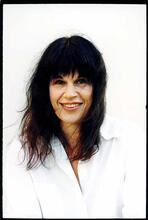
Israeli writer, actress, and filmmaker Gila Almagor grew up the only child of a mother whose entire family had been murdered in the Holocaust. After her mother was institutionalized in 1954, Almagor joined the Hadassim youth village. She then moved to Tel Aviv at age fifteen to study acting and join the Habimah Theater group. In her acclaimed 1988 autobiographical film Summer of Aviya, she played her own mother, whose post-Holocaust trauma and depression were scorned by Israeli society. When critics discovered that Almagor’s mother had fled to Palestine before the Holocaust, Almagor created a sequel to clarify the issues of survivor’s guilt. Almagor is also a founder of the Israeli Union of Performing Artists, the Tel Aviv International Film Festival, and the Gila Almagor Wishes Foundation.
Family and Education
Writer and actress of stage and screen, Gila Almagor was born in the city of Haifa in then-Palestine in 1939. When her mother, Henya Alexandrowitz, was five months pregnant, Almagor’s father, Max Alexandrowitz, a police officer, was shot and killed by an Arab sniper. Almagor’s mother, who had left her family in Europe to immigrate to Palestine, was left to raise her daughter alone. After the Second World War, Almagor’s mother learned that all her relatives had been murdered in the Holocaust.
Gila, an only child, grew up caring for her mother, whose feelings of guilt over the death of her family were causing her to slowly loosen her grip on reality. When her mother remarried in 1952, Gila was sent to the Hadassim youth village, a boarding school for recent immigrants and Holocaust survivors. In Hadassim, Almagor took her first acting classes under the instruction of Tzvi Refael. Two years later, at the age of fifteen, Almagor left Hadassim to become an actress in Tel Aviv. She studied at the Habimah Theater’s Drama School and, after an internship at the theater, was accepted into the theater company in 1956.
Early Acting Career
field_section_text_value
The Summer of Aviya
Until the 1980s, Almagor concealed her family background and did not challenge the public perception of her as a Jew of Moroccan descent, an image arising from several of her film roles. In 1986, Almagor published a novel for young adults based on her relationship with her mother. The book, which became a bestseller, was translated into sixteen languages and made part of the official school curriculum in Israel. Almagor adapted it into a one-woman play and later into an award-winning film, The Summer of Aviya.
The film depicts the relationship between a Holocaust survivor, played by Almagor, and her 10-year-old daughter Aviya during the first years of the Israeli state. Almagor's acting is remarkable for its psychological depth and its shifts of mood and temperament, which powerfully relay the effect Henya’s trauma had on her erratic behavior and on her daughter. The highly acclaimed film acted as a national therapy of sorts, leading a generation of Israelis to come to terms with the ridicule that Holocaust survivors endured during the early years of the state. Following the film’s success, Almagor’s family history came under media scrutiny and Israelis were shocked to learn that her mother was not a survivor of the Holocaust but had arrived in then-Palestine before the war.
Almagor followed the success of the novel and the film with a sequel, Under the Domim Tree, which was adapted into a film by the same name in 1995. In this sequel, Aviya is now a teenager living in a school for orphans and Holocaust survivors. On her visits with her mother, she begs her for a few words about her past, about her relatives, about her long-dead father, whom she never met. But her mother is so lost in the past that she cannot even heed the emotional needs of her daughter.
Service and Honors
In 1981 Almagor co-founded the Israeli Union of Performing Artists. In 1998 she was elected to the City Council of Tel Aviv-Jaffa, where she held the portfolio of Arts and Cultural Affairs until 2004. She has served as a judge at international film festivals and her films were featured in retrospectives in major cinemas and museums worldwide. Almagor is also the founder of the Gila Almagor Wishes Foundation, a non-profit organization that works for the welfare of children with terminal diseases. She published two more novels, Alex Lerner, Dafi and Me, and Erga, a Dream Child in 2003.
Among the many honors Almagor received during her long career are the Kinor David Award for her work in film and theater (ten times); first prizes in Chicago and Atlanta Film Festivals for Siege; the Berlin Silver Bear Award for Summer of Aviya; Life Achievement Award in the Israel Film Festival in New York, 1990; Actress of the Decade—Yediot Ahronoth and the Israel Film Institute, 1990; Best Israeli Feature for Under the Domim Tree, Jerusalem Film Festival, 1995; Life Achievement Award, Jerusalem Film Festival, 1996; Life Achievement Award, Israeli Academy of Cinema, 1997; President Commendation for Volunteering for Sick Children; Award for her human contribution to the community by the International Women's Forum in the United States; Israel Prize for Cinema, 2004; Hans Christian Andersen Ambassadorship, 2005, Crotia’s Liberitas Film Festival Prize for Lifetime Achievement, 2007, and the EMI Prize for Lifetime Achievement, 2017. In 2009, both Ben-Gurion University of the Negev and Tel Aviv University awarded her an Honorary Doctorate.
“Gila Almagor” [Hebrew]. Israel Prize, n.d., https://cms.education.gov.il/EducationCMS/Units/PrasIsrael/Tashsad/GilaAlmagor/KorotHaimGilaAlmagor.htm.
“Gila Almagor” [Hebrew]. The Israeli Film Book, edited by Shmulik Duvdevani and Raya Morag, n.d., https://www.cinemaofisrael.co.il/%D7%92%D7%99%D7%9C%D7%94-%D7%90%D7%9C%D7%9E%D7%92%D7%95%D7%A8/.

Double your impact to amplify Jewish women’s stories—
All gifts matched up to $35,000
Before you close this article, please consider supporting the Jewish Women’s Archive and uplifting Jewish women’s voices.
At JWA, we preserve the voices of Jewish women and gender-expansive people past and present, share them freely with millions online, and empower a new generation of Jewish feminists to lead with courage, creativity, and conviction.
But none of this happens without you. JWA is an independent nonprofit— we rely on people, like you, who believe that history belongs to all of us and that the voices of Jewish women must remain powerful, and heard.
This month, a generous JWA board member will match every gift dollar for dollar—up to $35,000—through June 30. Your contribution goes twice as far right now.
Every contribution—no matter the size—helps us document, teach, and inspire through Jewish women’s stories.
It takes less than a minute to make a difference.
Thank you for being a part of the JWA community,
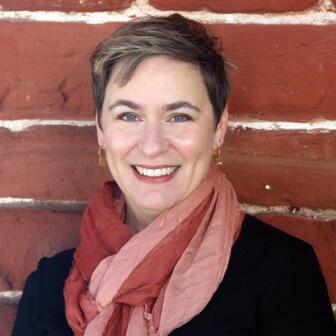
Judith Rosenbaum, CEO

