

Frida Alexandr

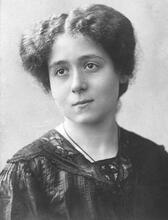
Frida Alexandr is the only woman writer to have chronicled the first Jewish trailblazers in the southern region of Brazil during the early 20th century. Born to immigrant parents, Alexandr narrates the daily lives and efforts to practice Judaism of the farmers in her only published book, Filipson. In a dynamic and picturesque style, she conveys occurrences in the Jewish life cycle, interactions with non-Jewish locals, natural disasters, and an array of other episodes that affected the Colony Filipson, the farm on which she grew up. Though she was relatively unknown in her lifetime, Alexandr was the author of an important literary document about Jewish life in the Brazilian countryside.
Jewish Life in Southern Brazil
Little is known about a community of Jewish peasants living in the southern region of Brazil at the beginning of the twentieth century. It comprised several farms spread out in the western region of the Rio Grande do Sul province, each farm being divided into plots that were allocated to individual immigrant families. The residents had various occupations in their native countries, but in the farms of southern Brazil they became involved solely in agricultural activities. Since most of them were from the shtetl—small Jewish towns in Eastern Europe—their new life proved to be highly unusual, demanding and harsh.
Upon emigrating, the former small-town dwellers became colonists on the farms managed by the Jewish Colonization Association (JCA), an organization headed by Baron Maurice de Hirsch (1831–1896), a Jewish banker and philanthropist from Bavaria. He was able to attain, at a high cost, the right to remove ordinary Jews from their poverty and endangered situations and transfer them to South America. Besides Argentina, the JCA chose the southern area of Brazil to place the immigrants, where land and some agricultural tools were loaned to them, which were used under the supervision of agricultural technicians.
Early Life and Inspirations
A Brazilian-born daughter of immigrants, Frida Alexandr (born Frida Schweidson) is the only woman writer to describe those Jewish cowboys from the viewpoint of one who lived among them. Her only published book was the novel Filipson, its title being the name of the farm where she was born on December 29, 1906.
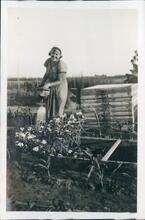
Frida Schweidson lived in Filipson from her birth, so her stories cover the two decades of her life on the farm, to which she added a few others, told by some of the colonists and her relatives. The narrator informs readers about several episodes of life in the countryside, ranging from plagues that more than once destroyed the harvests, to attacks by animals, outlaws, and Indians on the farmers, and the peasants’ despair when epidemics or diseases took the lives of children and adults.
Filipson
The novel is composed of thirty-six chronicles which are descriptive, in a photographic or realistic style, of the many activities engulfing the cosmogony of the first Jewish trail blazers in the region, including the peasants, cattle handlers, milk collectors, pharmacists, healers, midwives, and schoolteachers, as well as others involved in the plowing, planting and harvesting in the fields. In spite of their descriptive sharpness, the chronicles are endowed with the author’s tender and nostalgic attitude towards the world she left behind as a young bride when she married Boris Alexandr, a Russian émigré, with whom she moved to the city of São Paulo, where they settled and established a family.
Many of the narratives describe the farmers’ efforts to keep alive the practice of religious rites and the observance of holidays and traditions of Judaism. Once established on their respective plots of lands and after having built their houses with their own hands, the Jews also built a synagogue and a school for their children. Their sons and daughters would spend part of the day learning the basics of Judaism along with classes in Hebrew, Portuguese, mathematics, history, and geography. Depending on their ages, the children were required to help the family in the fields or in their homes. Frida alludes to this period of her life by complaining that, just as happened to many other children of the colonists, little time was left for her to be a child.
In a dynamic and picturesque style that characterizes all the chronicles, the author conveys many occurrences related to the Jewish life cycle, which were venerated and performed according to the farmers’ means. The titles of some of the narratives convey certain episodes directly related to events that typified Jewish life in the Brazilian countryside: “Term used for ritually untainted food according to the laws of Kashrut (Jewish dietary laws).Kosher3 Meat and Circumcision,” “The ‘rébale’,” and “Kol Nidra” [sic]. Other stories concern people who had an impact on Filipson and non-Jewish locals in direct contact with the farmers. Epidemics, natural calamities, and outlaws that affected the Colony Filipson, as the farm was also known, were recorded. In the midst of the array of bad news that swept the farm from time to time the narrator also tells of festivities, joyful receptions of travelers returning home, courtship, and the significance of the landscape in her memories.
While Alexandr presents these episodes from the viewpoint of an adult woman, she is nevertheless bound by the period in which she lived through them, from childhood to adolescence. Being a girl, Alexandr was restricted to a space and to roles that did not affect boys. For example, she could not be present at rodeos or other activities where males would be exercising their manhood in horse-taming. She would then rely on her brothers’ account of these practices and, by the same token, on third parties to tell about episodes that took place before she was born.
Later Life
field_section_text_value
Selected Works
Filipson, Memórias da primeira colônia judaica no Rio Grande do Sul. Preface by Carlos Rizzini. São Paulo: Fulgor, 1967.
Igel, Regina. “Brazilian Jewish Women Writers at the Crossroads.” In Passion, Memory, Identity, edited by Marjorie Agosín, 59–84. Albuquerque, New Mexico: University of New Mexico Press, 1999.
More Like This

Double your impact to amplify Jewish women’s stories—
All gifts matched up to $35,000
Before you close this article, please consider supporting the Jewish Women’s Archive and uplifting Jewish women’s voices.
At JWA, we preserve the voices of Jewish women and gender-expansive people past and present, share them freely with millions online, and empower a new generation of Jewish feminists to lead with courage, creativity, and conviction.
But none of this happens without you. JWA is an independent nonprofit— we rely on people, like you, who believe that history belongs to all of us and that the voices of Jewish women must remain powerful, and heard.
This month, a generous JWA board member will match every gift dollar for dollar—up to $35,000—through June 30. Your contribution goes twice as far right now.
Every contribution—no matter the size—helps us document, teach, and inspire through Jewish women’s stories.
It takes less than a minute to make a difference.
Thank you for being a part of the JWA community,

Judith Rosenbaum, CEO

