

Advertising and Consumer Culture in the United States

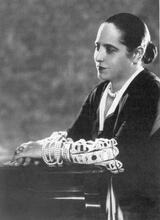
When Helena Rubinstein died at the age of ninety-four, she left behind an international cosmetics business worth millions, and the foundation she established to fund the arts.
Institution: The Jacob Rader Marcus Center of the American Jewish Archives, Cincinnati, OH, www.americanjewisharchives.org and Studio Lipnitzki
Jewish women played a disproportionate role in the development of American consumer culture in the twentieth century. The late nineteenth century saw the emergence of the modern corporation, the rise of the department store and mail-order companies, and whole new consumer industries, many of which were open to entrepreneurs with limited capital. America Jews were disproportionately involved in commercial pursuits, ranging from clothing to furniture to real estate to movies, and Jewish women in particular were more involved in commerce than women of most other groups and seemed particularly responsive to the sophisticated new material world they discovered in America. In the fields of resorts, women’s wear, cosmetics, toys, film-production, and advertising, Jewish women have stood among the nation’s most significant entrepreneurs and executives.
Introduction
field_section_text_value
Resort Life
The fascination of New York’s Jewish immigrants with the idea of the vacation produced a rich resort life in the Catskill Mountains, home to Grossinger’s, one of the country’s most renowned resorts. In the early twentieth century, the Jewish vacation was viewed as an escape for mothers from the drudgery of housekeeping in the congested immigrant city. Husbands typically sent their wives and children to the mountains, joining them on weekends. Given the strong female presence in the holiday settings, it is not surprising that a woman rose to become the quintessential resort entrepreneur. Innkeeping was a common occupation among the Jews of Eastern Europe, and the Galician-born Jennie Grossinger had ancestors on both sides of her family who had served as innkeepers or estate managers. Her development as an entrepreneur took place within the framework of a family business that began in 1914 when the Grossinger family bought a small farm in Ferndale, New York, and opened a boardinghouse for vacationing immigrants. By the late 1920s, situated on a new, larger property, the successful Grossinger’s Hotel and Country Club included sixty-three acres of woodland and a lake. In the highly personalized business of resort proprietorship, Jennie Grossinger established herself not only as a capable business manager, but more importantly as a hostess whose warmth and concern for her guests’ comfort were instrumental in building up a loyal clientele over the years.
Taking charge of the family business after her father’s death in 1931, Grossinger produced the model of a total resort experience for the average as well as the affluent consumer. From its early days, the complex included a bath in every room, still a notable luxury in the 1920s, and a huge dining room that seated four hundred. It also offered menu selections, a dance band, camp activities for children, winter sports such as ice skating, uniformed bellmen, and other amenities that would become standard in the area’s hotels. To this enterprise, Grossinger added a host of “extras,” including art classes, free honeymoons to couples who had met at Grossinger’s, winter “reunions” of summer guests, convention facilities, vacations donated to charities for raffle and door prizes, and a constant circuit of talented and ultimately famous entertainers, with the innovative practice of booking a different act every night. Grossinger’s also became famous for its stable of professional athletes who trained and gave lessons at the resort, including tennis star Jack Kramer and swimming great Florence Chadwick. At its peak, Grossinger’s had 600 rooms, a dining room that seated 1,700 people, two kitchens (one for meat and one for dairy), a nightclub with two stages, a post office, an airport, a ski slope, an Olympic-sized swimming pool, a golf course, and a riding academy, as well as a space for Jewish and Christian religious services. Fittingly, its slogan was “Grossinger’s Has Everything.” Although changing vacation patterns among Americans would lead to the resort’s decline after the 1960s and its closing in 1986, Jennie Grossinger had presided over and personified the ultimate democratic luxury resort of the early and mid-twentieth century.
Women’s Clothing

field_section_text_value
Cosmetics
 view larger
 view larger
When she left her home in Poland to live with relatives in Australia, Helena Rubinstein took with her twelve pots of face cream her mother had obtained from a Cracow chemist. She offered them for sale—and the rest is history.
view detailsfield_section_text_value
Dolls, Toys, and Games
field_section_text_value
Advertising
field_section_text_value
Motion Picture Industry
field_section_text_value
Bibliography:
Heinze, Andrew R. Adapting to Abundance: Jewish Immigrants, Mass Consumption and the Search for American Identity (1990).
Neu, Irene D. "The Jewish Businesswoman in America," American Jewish Historical Quarterly 66 (September 1976): 137-154.
Pope, Daniel and William Toll. "We Tried Harder: Jews in American Advertising," American Jewish History 72 (September 1982): 26-51.
Bibliographical information about women with their own entries in this publication is included with each individual entry. For information on women without their own entries:
On Linda Wachner:
Working Woman (May 1992).
Company profile of Warnaco in International Directory of Company Histories, vol. 12.
On Anne Klein:
NYTimes, March 20, 1974.
Newsweek (April 1, 1974).
Time (April 1, 1974).
On Donna Karan:
New Yorker (November 7, 1994).
Vogue (June 1994).
NYTimes Magazine (May 4, 1986).
Cosmopolitan (October 1988).
Savvy Woman (September 1989).
On Diane von Furstenberg:
Biographical Dictionary of American Business Leaders, Los Angeles Times, August 31, 1995.
Newsweek (March 22, 1976).
On Diana Forman:
Jenna Weissman Joselit, The Wonders of America (1994), 82-84.
More Like This






Double your impact to amplify Jewish women’s stories—
All gifts matched up to $35,000
Before you close this article, please consider supporting the Jewish Women’s Archive and uplifting Jewish women’s voices.
At JWA, we preserve the voices of Jewish women and gender-expansive people past and present, share them freely with millions online, and empower a new generation of Jewish feminists to lead with courage, creativity, and conviction.
But none of this happens without you. JWA is an independent nonprofit— we rely on people, like you, who believe that history belongs to all of us and that the voices of Jewish women must remain powerful, and heard.
This month, a generous JWA board member will match every gift dollar for dollar—up to $35,000—through June 30. Your contribution goes twice as far right now.
Every contribution—no matter the size—helps us document, teach, and inspire through Jewish women’s stories.
It takes less than a minute to make a difference.
Thank you for being a part of the JWA community,


Judith Rosenbaum, CEO

