Stoking the Fire: Lighting My Great-Great-Grandmother's Shabbat Candlesticks


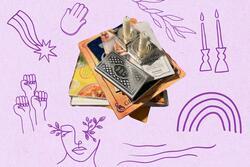
What do you bring with you when you are starting a new life in a country where you will be thousands of miles from your family? This was the question I asked myself when I packed for boarding school last year. I was moving from Hong Kong to a boarding school in Massachusetts, after having lived outside the United States for 7 years. This question was also the one my great-great-grandmother, Bess Kempner, must have asked herself when, as a young teen, she fled from Estonia with her two younger sisters, only bringing necessities. Bess decided that relics of her Jewish identity were her tangible connection to home. She decided to bring a brass bowl, likely used for mixing challah, and her family’s brass candlesticks.
Bess eventually moved to Los Angeles, where her family maintained their cultural Jewish heritage even as they were not religiously observant. As my family’s connection to religious Judaism faded, Bess’s brass candlesticks shifted from a ritual object to a family heirloom; still just as valued, but now decorative, not practical. When I was born, my family never went to synagogue, didn’t observe any holidays, and didn’t even light Shabbat candles on Friday nights. When I was old enough to understand that I was Jewish, around age six, I changed this. We lived in rural Maine, and I went to a school where I was the only Jewish kid I knew. I was on the outside because I was Jewish, despite not even observing any holidays or rituals. I felt so alienated for something that I didn’t even feel that deep of a connection to. At that point, I decided, if I were Jewish, I might as well do something about it. If I was going to be put on the outside for my differences, I might as well embrace what kept me apart. So, our family started observing Shabbat; lighting candles, making kiddush, eating challah, the whole shebang.
Up until the age of thirteen, I wasn’t even aware that we had any Judaica from my ancestors. As we were preparing my bat mitzvah, we emphasized connection to relatives on both sides of the family. My maternal grandfather, a potter, handmade three kiddush cups for me. My maternal grandmother sewed my tallit. However, my parents and I were still unsure of how to include my paternal relatives. Then, my paternal grandmother reached out to us. She mentioned a pair of brass candlesticks. She had visited the Skirball Cultural Center, where she saw a pair of Shabbat candlesticks reminiscent of Bess’s. She had gone her whole life not realizing the true purpose of her grandmother’s brass candlesticks, but that exhibit made her realize that they had been Shabbat candlesticks all along.
My great-great-grandmother's Shabbat candlesticks were gifted to me for my bat mitzvah, and they have become part of my family’s weekly Shabbat observance ever since. The story of these candlesticks and their forgotten purpose illustrates a larger narrative of my Judaism. In the New World, the candlesticks lost their original purpose but maintained a place of honor. Like the candlestick, my family’s Jewish identity was present in many ways that mattered, but not in others. But, like the candlesticks, my family’s Judaism was reinvigorated decades later. It was reawakened when I, as a young girl, asked if we could start observing Shabbat. It flourished when, as a teenager, I became the first in generations to use the candlesticks again.
My Jewish identity has always been a large part of who I am, even when I didn’t observe to the extent that I do now. Any customs or rituals I have today all came into my life through my own decisions. The way I practice Judaism has always been self-motivated, something that has made me stand out from many of my Jewish friends, who only observe Jewish customs because it’s what their families have always done. As a child of two historians, my Judaism is also driven by the memory of those who came before me. When I light candles on Shabbat, using the same candlesticks that my ancestors lit over 100 years prior, I feel connected to everyone who has come before me. I haven’t given the candlesticks a new life; I have merely woken them up from a deep slumber.
My self-motivated Judaism has, however, been challenged in new settings. I am currently attending a boarding school, about 8000 miles away from my parents and my Jewish community. Many Jews, especially teens, take our Jewish community and connectedness for granted. It’s easy to be Jewish when other Jewish people are there beside you. It’s a very different thing to continue to practice Judaism when you are alone.
This aloneness has given me a newfound understanding of my great-great-grandmother Bess. When she had to start over in a new place, she brought something that connected her to home. I, too, have brought connections to Jewish ritual. I have a mezuzah on my dorm’s doorpost, and my desk houses a 2-inch replica of Bess’s candlesticks. I can’t light them because you can’t have candles in a dorm room, but they connect me to every time my ancestors have lit candlesticks in the past. Like Bess so long ago, I have lit the flame of my family’s Jewish identity, and it will continue to burn by my side even when I feel alone.
This piece was written as part of JWA’s Rising Voices Fellowship.
Double your impact to amplify Jewish women’s stories—
All gifts matched up to $35,000
Before you close this article, please consider supporting the Jewish Women’s Archive and uplifting Jewish women’s voices.
At JWA, we preserve the voices of Jewish women and gender-expansive people past and present, share them freely with millions online, and empower a new generation of Jewish feminists to lead with courage, creativity, and conviction.
But none of this happens without you. JWA is an independent nonprofit— we rely on people, like you, who believe that history belongs to all of us and that the voices of Jewish women must remain powerful, and heard.
This month, a generous JWA board member will match every gift dollar for dollar—up to $35,000—through June 30. Your contribution goes twice as far right now.
Every contribution—no matter the size—helps us document, teach, and inspire through Jewish women’s stories.
It takes less than a minute to make a difference.
Thank you for being a part of the JWA community,
Judith Rosenbaum, CEO