Riot Grrrl’s Legacy: Rebellion or Aesthetic?


On my fourteenth birthday, a simple gift transformed into a political declaration the moment I saw the tag on the collar. Opening the box, I was met with a sea of pink, a contrast to the bold call to action: “Destroy the Patriarchy” printed in thick black letters. The t-shirt stamped with the name Pussy Riot, leaning into the whimsy, featured the soft image of a bear and rabbit holding a rainbow. The message it carried, however, was far from gentle. The garment was a direct transmission of rage and defiance.
This anger and defiance are central to the Riot Grrrl movement, a subculture that didn’t just emerge: it was declared. It started with the movement’s name itself, where “Grrrl” acts as a conscious attack on society's “Girl = Dumb, Girl = Bad, Girl = Weak”, it's a growl for change. Taking root in second-wave feminism, a fight for independence and the belief in the untamable woman, the movement forged a new, ferocious identity through the lens of punk rock. The anti-establishment philosophy of punk paired perfectly with the anti-patriarchy fight of feminism, infusing a raw, unapologetic authenticity into the feminist tradition started by the first- and second-wave movements.
The modern Russian art collective Pussy Riot considers itself a mix of the Riot Grrrl and Guerrilla Girls movements. Though separated by time and space, Pussy Riot translated Riot Grrrl’s defiance into high-stakes political protest. They carry forward the core Riot Grrrl principle of confrontational performance to change authority and demand radical change.
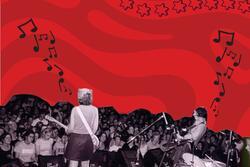
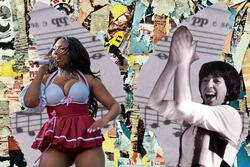
To truly understand the effect of Riot Grrrl, you must engage with the bands behind the movement. Groups like Bikini Kill, Bratmobile, and Heavens to Betsy demonstrated what punk could be for feminism. Bikini Kill singer Kathleen Hanna would frequently stop shows, calling the women to the front. And the traditional female vocals within rock were abandoned for a guttural scream, in ways they deemed feminine or unfeminine, pushing back against traditional gender norms in rock. The status quo that women could only gain traction in rock through being a groupie was exactly what these bands were determined to destroy. They would not settle for objectification; they were demanding the stage, the mic, and the creative control.
The Pacific Northwest punk scene in the 90s was a crucible of change. Instead of taking punk’s ethos mainstream, Bikini Kill and their peers intentionally turned toward building the Riot Grrrl movement as a subculture.
The key feature of the movement's success was the fierce “do it yourself” mindset. The Riot Grrrl movement weaponized zines as a primary tool for building the subculture’s community and activism. These handmade, photocopied, and strikingly opinionated pieces created a tangible fight, distributing and circulating ideas, art, and manifestos outside of mainstream media. The movement’s manifesto was famously printed in the “Bikini Kill Zine #2 (1991).” The zines show how the movement’s commitment to the rejection of mainstream media continues to shape alternative publishing today.
This “do it yourself” legacy became a practical reality during my freshman year of high school. In our school's intersectional feminism club, a group of around 15 students spanning from freshman to seniors, each bringing a different perspective, we collectively created a zine. This was not merely an art project, but an echo of Riot Grrrl pioneers who bypassed the captivity of mainstream media to distribute thoughts, fears, and manifestos. Our zine was a collaboration of raw power. The comments on assault, social media abuse, and the sexism we faced in school were a protest that continued even after our club meeting had ended. It showed us and the world that the physical act of pasting, cutting, and writing is political; it’s a way of claiming space outside of our established systems.
However, the movement faced significant shortcomings. Over time, the radical “otherness” of their ethos was minimized and marketed by mainstream media. This negative trend was directly reflected in the shirt I received. While the Pussy Riot message is authentically fierce, the t-shirt represents the eventual commodification of the Riot Grrrl movement, a call to action printed on an easily purchased, mass-produced, and rather expensive garment. This central contradiction even extends into Pussy Riot’s modern work. I recently attended a Q&A with Pussy Riot creator Nadya Tolokonnikova regarding her performance, Police State, which was directly inspired by the two years she spent as a political prisoner in Russia. Yet, underneath the powerful narrative surrounding the entrapment and liberty she found within prison, lay a distinct irony: entering the event, one could purchase her book for $65.00 USD and the movement’s signature balaclavas for $60.00. This juxtaposition, selling the symbols of anti-establishment at luxury prices, underscores a difficult truth. Even the most radical movements struggle to escape the forces of consumer capitalism they originally sought to defy. Furthermore, the distinctive fashion of the Riot Grrrl movement, a mix between punk’s toughness and femininity, was aesthetically appropriated throughout the nineties until now. Major clothing brands, like Marc Jacobs’ Perry Ellis collection, rebranded the look and sold it back to the masses. Fashion magazines, such as Vogue, continue to rave about the longevity of the grunge and punk aesthetic. Ultimately, the media stripped combat boots and babydoll dresses until the rebellion was reduced to a mere style.
Even with its historical shortcomings and its co-option by the mainstream media, the true success of Riot Grrrl was never in creating a perfect, finished movement. Its victory is found in the continuation of the fight it stood for. It is a fight that has been inherited by today’s feminists, its scope broadening to encompass the defence of democracy in Russia or the specific struggles with sexism and marginalization encountered by my classmates and me. This legacy has been embraced and corrected by new, more inclusive generations, creating a roar for anyone who has been marginalized or expected to keep quiet. The message passed from them to us remains a declaration for the entire world to hear: Girl = Smart, Girl = Good, Girl = Strong.
This piece was written as part of JWA’s Rising Voices Fellowship.
Double your impact to amplify Jewish women’s stories—
All gifts matched up to $35,000
Before you close this article, please consider supporting the Jewish Women’s Archive and uplifting Jewish women’s voices.
At JWA, we preserve the voices of Jewish women and gender-expansive people past and present, share them freely with millions online, and empower a new generation of Jewish feminists to lead with courage, creativity, and conviction.
But none of this happens without you. JWA is an independent nonprofit— we rely on people, like you, who believe that history belongs to all of us and that the voices of Jewish women must remain powerful, and heard.
This month, a generous JWA board member will match every gift dollar for dollar—up to $35,000—through June 30. Your contribution goes twice as far right now.
Every contribution—no matter the size—helps us document, teach, and inspire through Jewish women’s stories.
It takes less than a minute to make a difference.
Thank you for being a part of the JWA community,


Judith Rosenbaum, CEO