

My Tallit is Embroidered with Tradition


“Was your bat mitzvah special?”I asked my Grandma Ellen. “I liked my dress,” she said with a laugh. “But no, it wasn’t special. It was something that we all did.” As she smiled, I saw my imagined version of her group bat mitzvah with nine other girls collide with the truth. In my head, the experience she had was an injustice, a blight on the tight-knit Jewish community that existed in Woodbridge, New Jersey, in 1960. I thought that if she didn’t have the individual experience that I think everyone deserves, then her synagogue must have been horribly sexist.
Only once have I heard my grandmother speak with the feminist indignation I was expecting, and it was on behalf of her best friend, Jane, not herself. My grandma has been friends with Jane, who is a year older, since she was four. When the time came for Jane to have her bat mitzvah, she had a Friday night service and read a photocopy of the Torah a year before my grandmother. Jane didn’t wear a tallit.
“That was the first time I started to realize that it was bullshit,” my grandma whispered humorously. But when it came to her own, she described it as what you did as “a daughter of the congregation." Almost like graduating, the experience was rote. Divided among them, the girls in my grandmother’s class sang blessings, read psalms, and delivered speeches. None read Torah or wore a tallit. The portion of the service my grandmother was given was the opening speech, which she didn’t even write for herself.
When I asked Grandma Ellen to come over to my house to chat about her bat mitzvah, she surprised me by sharing the folder from that Saturday morning. Within lay a yellowed piece of paper titled “Purpose of Bas Mitzvah Ceremony” in crooked typewriter lines. It declared that “with great pride and yet with a feeling of deep humility that we, the Bas Mitzvah group, dedicate ourselves…to keeping alive our beautiful age-old traditions.” The word “bas” instead of “bat” is the Yiddish Eastern European pronunciation that my Grandma Ellen still uses. My grandma wasn’t resentful about being grouped into a class with other young women. Instead, she explained it was merely that women weren’t given the space to be individual at the time of her Jewish upbringing. When the time came for me to become a bat mitzvah, she was proud that I got to celebrate my uniqueness.
In our conversation, Grandma remarked on the program and how it was divided into three sections: the home, synagogue, and community.
When I saw the word “home,” a red light went off in my head, signaling a potential for the enforcement of women’s traditional “domestic” role hidden in the words. But instead, my grandma talked about how important it is to keep tradition alive and pass on family practices to the next generation. This value is also known as l’dor vador and is a key teaching in b’nei mitzvahs. To this day, Grandma cooks Shabbat dinner every Friday night, hosts Rosh Hashanah parties, and makes matzo ball soup for Passover. She believes that the one who keeps the traditions alive continues the religion.
In contrast, my bat mitzvah, in August of 2023, took months of preparation. I wrote my own d’var Torah and delivered it to the attendees. I led the Saturday morning service with my reform rabbi, a woman wearing her own tallit as mine was presented to me.
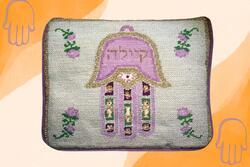
My tallit, a controversial object even today (in the Merriam Webster Dictionary, it still says that tallitot are worn by Jewish men), was chosen by my grandmother and me. In July, before my bat mitzvah, we went on a weeklong trip to New York City, which was a special bonding experience for the two of us. We went to the MET, ate Italian food on the Upper West Side, and visited the Jewish Museum gift shop to choose a tallit for me. The one we selected is wonderfully feminine, with three-petaled flowers in shades of purple and pink, connected to twisting golden brown vines. In helping me find my tallit, my grandma practiced passing down traditions. My bat mitzvah was one of the most important events in my life, and wearing a tallit made me feel fully connected to my faith.
However, at first, I didn't like my tallit. I couldn’t see beauty in the simplicity of the shapes or be dazzled by the shimmering thread. I begrudgingly let my grandmother choose it. While I may have resented the pattern at first, I have never denied how meaningful it is that my grandma passed down this tradition to me. Most recently, I wore it to high holiday services and felt its beauty resting comfortably on my shoulders. Grandma supported me through my coming into Jewish adulthood, and when I look at my tallit now, I see an embroidered pattern of blossoming Jewish observance supported by twining stems of knowledge and tradition woven together with a love for my belief.
Similar to my grandmother’s bat mitzvah, my experience was the norm at my synagogue. But at the time, I had no idea how big the contrast was between our experiences. While I had a bat mitzvah that centered me fully and celebrated my ability to participate in Jewish discussion and reflection as an adult, someone had handed my grandmother a speech to read. When my grandmother took me to buy a tallit, she was helping me have the experience I deserved, the same as any Jew who is coming of age.
My bat mitzvah was not a protest. It was not a cry of outrage at past discrimination, or a challenge to those in the present who say I shouldn’t read Torah or wear a tallit. However, my experience that Saturday morning was still feminist as an instance of doing what I believe in, without a thought to people who might say I shouldn’t.
This piece was written as part of JWA’s Rising Voices Fellowship.
Double your impact to amplify Jewish women’s stories—
All gifts matched up to $35,000
Before you close this article, please consider supporting the Jewish Women’s Archive and uplifting Jewish women’s voices.
At JWA, we preserve the voices of Jewish women and gender-expansive people past and present, share them freely with millions online, and empower a new generation of Jewish feminists to lead with courage, creativity, and conviction.
But none of this happens without you. JWA is an independent nonprofit— we rely on people, like you, who believe that history belongs to all of us and that the voices of Jewish women must remain powerful, and heard.
This month, a generous JWA board member will match every gift dollar for dollar—up to $35,000—through June 30. Your contribution goes twice as far right now.
Every contribution—no matter the size—helps us document, teach, and inspire through Jewish women’s stories.
It takes less than a minute to make a difference.
Thank you for being a part of the JWA community,
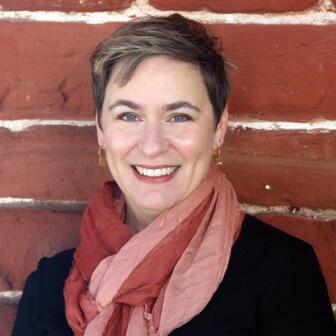
Judith Rosenbaum, CEO



Great essay Aviva!