
Faith in a Community of One


As a child, I thought people were born with knowledge of the Holocaust. I would’ve told you that maybe some scholars or professors had a more in-depth understanding, and maybe some non-Jews knew a little less, but everyone had to know something, right? People didn’t live their lives without knowing about the events of the 1940s, I thought. I look back now, smiling about the Jewish day-school-bred naivety. But I believed it to be true. That’s why I was struck so deeply when that dogma was shattered.
It was stuffy and damp, so damp that the books in our summer camp library felt shriveled at my touch. I loved going there, being surrounded by hundreds of books that looked as if they were sitting patiently, waiting to be read by me.
I had a friend who accompanied me. She wasn't Jewish, which wasn't odd, considering the camp was secular. In fact, I was the only observant Jew there. But that didn't matter to fourth-grade Naomi, who had little interest in the meaning of diversity and lots of interest in her hour of reading. That friend and I browsed the shelves for a little while until I found a book about Anne Frank: a figure as familiar as my parents' scoldings, as commonly taught about as algebra.
“I'll read this one,” I said.
“What’s it about?” my friend asked.
“Anne Frank,” I replied as I sat down on the library’s gum-stained beanbags.
“Who’s that?” she asked. I was confused. I thought I heard her wrong.
“What do you mean, ‘Who is that?’ Don’t you know who Anne Frank is?” She shook her head.
“She’s from the Holocaust." She shook her head again.
“You don’t know what the Holocaust is?” I asked, almost rhetorically. For a third time, the head-shaking was getting old. And so, I realized, was my naivety. I had walked into the room with the assurance that everyone around me carried the same information: the same education, the same historical teachings, the same internal yahrzeit (mourning) candle for the six million Jews who died.
Acknowledging my mistake wasn’t easy, but it wasn’t shattering either. I knew that, at this camp, I was the only observant Jew. Internalizing this fact began to solidify an idea that I grew to cherish: I always felt most Jewish when I was alone in my Judaism. Something about the absence of everyone I knew, all the usual routine constraints that implemented Judaism into my daily life, solidified the importance of my religion. The fact that I kept kosher even when no one would’ve cared if I ate sausage at breakfast. The Shema I whispered at the edge of a diving board, terrified, mumbling, where no one could hear the echoes. And it wouldn’t matter if I shouted my prayer; I was the sole person who knew what it meant. I explained the weekly Torah portion to my bunkmates. I exclaimed profanities in Hebrew, too. I became my own pillar of faith, my own community. And to me, that was enough.
At my secular school, I’ve often felt this sentiment of prideful alienation arise again. I’ve been called Rabbi and Super-Jew-Deluxe. Only I know that on the pyramid of religious observance and knowledge, I am nowhere near the top. I wear pants, I kiss boys that I don’t marry, I eat non-kosher McDonald's French fries, and drink Diet Coke. But when no one knows the rules, they don’t know the constructed hierarchy either. And so, in my non-Jewish friends’ minds, I am the #1 Jew. And, embarrassingly, I like that. I can represent my religion however I choose, not the way they see Jews represented on the news about Israel or about some communities being against vaccines. I get to explain the traditions I take for granted, saying biblical names in a thick accent unknowingly. In a way, being Jewish in a sea of strangers is a little like giving a star-struck tourist directions in Times Square. You don’t realize how special it is because it’s become normal. But to them, everything is brand new.
The ineffable sense of feeling like a Jew comes when I’m surrounded by my community, too. I experience this at my synagogue, watching little babies in little kippas scattered around at the Shalom Hartman Institute, where I was a fellow and attended four Shabbatons, or, most notably, part of the Rising Jewish Voices Fellowship, where I have been privileged enough to be surrounded by wise, inspirational, and fun-loving teenage girls. These spaces remind me where I belong; where home is. But sometimes, when you’re home, you don’t realize how much more there is to see. How much more is than just what’s comfortable or familiar.
I will always cherish the environments that raised me, that taught me about my history and my heritage, my people and my personhood. The ones who allowed me to walk through life convinced that strangers had given as much emotional investment in Jewish history as I had. But sometimes, the time I feel most connected to my faith is when I’m alone in it. When I have nothing to prove to those around me and everything to prove to myself. And I know that no matter where I am or how I do, I have a family waiting for me to come home. And a meal to go along with it.
This piece was written as part of JWA’s Rising Voices Fellowship.
Double your impact to amplify Jewish women’s stories—
All gifts matched up to $35,000
Before you close this article, please consider supporting the Jewish Women’s Archive and uplifting Jewish women’s voices.
At JWA, we preserve the voices of Jewish women and gender-expansive people past and present, share them freely with millions online, and empower a new generation of Jewish feminists to lead with courage, creativity, and conviction.
But none of this happens without you. JWA is an independent nonprofit— we rely on people, like you, who believe that history belongs to all of us and that the voices of Jewish women must remain powerful, and heard.
This month, a generous JWA board member will match every gift dollar for dollar—up to $35,000—through June 30. Your contribution goes twice as far right now.
Every contribution—no matter the size—helps us document, teach, and inspire through Jewish women’s stories.
It takes less than a minute to make a difference.
Thank you for being a part of the JWA community,
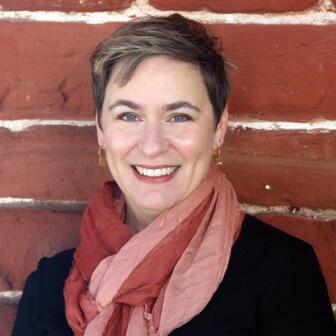
Judith Rosenbaum, CEO