
The Power of Visual Storytelling


field_section_text_value

How did the idea for Artful Disclosure come about?
The idea began simply enough: to conclude a semester high school elective course on Jewish women in modern America by interviewing a woman at least 80 years old. We had worked together for many years incorporating art into many different courses, including English lit, Dante’s Commedia, and Biblical women—so it was no surprise that Sheila suggested these interviews might be turned into visual stories that could be exhibited on the school’s empty walls. Little could we have imagined the legs that idea grew. That notion was the beginning for Artful Disclosure, which came to include yearly anticipation for the projects, culminating in community-wide celebrations and display in what became The Women’s Gallery, taking up most of our school’s first floor.
What inspired you to combine oral history and visual art in this unique way?
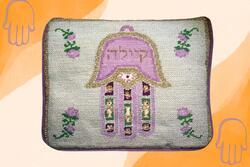
Written memoirs, once completed, can easily be relegated to a library shelf and forgotten. On the other hand, art—or visual storytelling—invites ongoing conversation. We realized the act of translating ideas into visual imagery and metaphor was in itself an act of creation and interpretation. The artist interprets and creates, and simultaneously the subject is brought out of obscurity and into public view. This mutual recognition is transformative.
What do you hope participants gain from the process of oral history interviewing?
Oral history interviewing is a great teacher. We learn from it the importance of patience, of careful listening, of not prejudging or anticipating an answer, of silence as a precursor to more complex answers, of the ability to be surprised and amazed and the curiosity to ask follow-up questions and then patiently await the response.

How do you guide participants who may not consider themselves artists through the art creation process?
Talking with participants about the metaphoric potential of a variety of materials and priming the pump with examples are good beginnings. Folding in time to talk through what they want to express visually is a good on-ramp for confidence. There are specific art media that are more responsive to the less secure artist, like collage or multimedia art to build the story.
What kinds of responses have you gotten from participants in this program?
Barbara: We have notebooks of participant reflections of how this course impacted them. They are regularly amazed at the challenging lives they are learning about. On some level they understand Maya Angelou’s line, “There is no greater burden than carrying an untold story.”
One example: Fifteen years after his high school course, a former student, by then a successful businessman and entrepreneur in another city, was visiting his old high school. By chance, I saw him standing by the piece he had created, weeping. I came over to say hello and ask what had brought him to tears. He said he had come to town to attend his grandmother’s 100th birthday party. “I suddenly realized,” he added, “I would never have known who she was without this project, would never have known her disappointments and challenges and the complex decisions she faced. I would have always thought of her as a generic old cookie-making, not particularly interesting Bubbie. Thank you for helping me know where I come from, and who I am.”
Sheila: Two participants representing a prominent cultural center from Montreal, Canada (my original hometown) attended our teaching workshop in Atlanta. They successfully replicated our model in their arts curriculum. I personally attended their “vernissage” (exhibition) of the finished works, accompanied by a video of meaningful and inspiring testimonials of the participants and the experiences they shared about their artistic process.

Double your impact to amplify Jewish women’s stories—
All gifts matched up to $35,000
Before you close this article, please consider supporting the Jewish Women’s Archive and uplifting Jewish women’s voices.
At JWA, we preserve the voices of Jewish women and gender-expansive people past and present, share them freely with millions online, and empower a new generation of Jewish feminists to lead with courage, creativity, and conviction.
But none of this happens without you. JWA is an independent nonprofit— we rely on people, like you, who believe that history belongs to all of us and that the voices of Jewish women must remain powerful, and heard.
This month, a generous JWA board member will match every gift dollar for dollar—up to $35,000—through June 30. Your contribution goes twice as far right now.
Every contribution—no matter the size—helps us document, teach, and inspire through Jewish women’s stories.
It takes less than a minute to make a difference.
Thank you for being a part of the JWA community,
Judith Rosenbaum, CEO

Bravo to Barbara and Sheila. So many stories so little time. You have added richness and understanding for so many because you have found a way to save life stories from being lost. I’m inspired by you!
Mazel tov to Sheila and Barbara for developing this impactful program. As a non-participant, but dedicated admirer, I eagerly looked forward to each meaningful, yearly community exhibition. I was always equally moved by the participants’ stories as well as by the brilliance of the chosen art forms. I am so excited that these talented ladies have had the opportunity to further develop this wonderful program and share Artful Disclosure as a creative legacy.
I was a part of the same group that MIriam Karp commented about. I'm one of those people who hate creative art activities but this program had such a significant impact on me. Not only did it allow me a whole new way of thinking about my grandmother but it caused me to contact many relatives. As we all worked together (I needed a lot of help) it became a shared world. All aspects of Barbara and Sheila's program was a true delight and the only arts and crafts project I will ever do. This was a gift.
This is a truly wonderful project and I’m so glad that it will now be shared with women all over the country!
I participated in one of Barbara and Sheila's workshops and created a pocketbook in honor of my paternal grandmother. I think I speak for the whole group when I say how moving it was to reconnect in a tangible way with an important woman in our lives. Barbara and Sheila's work should be shared with everyone. Thank you for the putting a spotlight on their wonderful program.
This is a remarkable program that should be shared with teachers and programs all over the country. Let’s hope that the word gets out! Bravo to JWA for supporting this work.
Kudos to Barbara and Sheila for making Artful Disclosure widely available to students, lifelong learners, and all who care about preserving family stories. Great to see JWA highlighting these amazing women and their truly impactful experiential learning project.
What a unique and creative way to share the life histories of our ancestors! I am sure that the high schoolers who were able to be a part of this project gained so much, and to be able to apply this to the community as a whole was a brilliant way to share the stories of those who built the community. Thank you for this article and I hope the model for this will be used in other communities.
Barbara and Sheila deserve the highest praise for this innovative, inspiring, brilliant and deeply meaningful project.
Wouldn’t it be a treat to have someone interview them and create artful disclosures about their lives, MANY years from now when they pass the 80 years old threshold?
What a gift these programs have been to so many women. They have inspired such , touching and very important personal reflection and learning.