

Purim Poem: Mishloach Manot


On my neighbor’s doorstep
I left a brown paper bag.
In it, I put two hamentaschen,
a clementine,
some chocolate pretzels,
and a small box of raisins.
To increase peace, love, and
friendship in the world,
obviously.
And then I walked away
feeling lighter,
unburdened,
the weight of endless obligation
lifted
for a moment.
You are permitted
to give and then walk away.
There are limits.
You may close your door,
your hand, your heart.
You can do all these things and
you will.
You must, actually.
But you may not bless
The closed door.
You may not turn your back
and say amen.
Rabbi Cohen Anisfeld's Reflection:
One of my favorite practices on Purim is the mitzvah of mishloach manot– delivering gifts of food to friends and neighbors. Rabbi David Hartman relates this mitzvah to the fact that the Book of Esther, which we read on Purim, does not mention the name of God. Purim speaks to all those times and places in which it is difficult to discern the presence of the divine in our world. For Hartman, the obligations of Purim teach us that the religious response to the hiddenness of God is radical human responsibility. What do we do when we can’t see God’s face? We turn our faces toward each other,we take care of each other– by delivering gifts of food to friends (mishloach manot) and by giving tzedakah to the poor (matanot la’evyonim).
Why don’t we say a blessing over the mitzvah of mishloach manot According to the Seridei Esh, R. Yaakov Yechiel Weinberg, the mitzvah of mishloach manot is intended to increase peace, love and friendship in the world – and as such, it is a mitzvah t’midit– a perpetual mitzvah that is incumbent upon us at all times and has no break. It is a mitzvah we can never say we have fulfilled, a mitzvah over which we can never say amen.
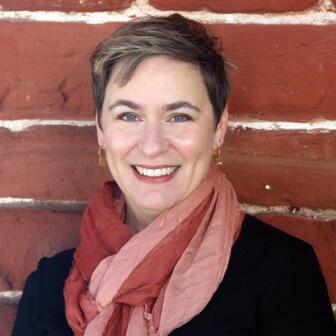
Rabbi Cohen Anisfeld is featured in JWA's Women Rabbis Exhibit.
Double your impact to amplify Jewish women’s stories—
All gifts matched up to $35,000
Before you close this article, please consider supporting the Jewish Women’s Archive and uplifting Jewish women’s voices.
At JWA, we preserve the voices of Jewish women and gender-expansive people past and present, share them freely with millions online, and empower a new generation of Jewish feminists to lead with courage, creativity, and conviction.
But none of this happens without you. JWA is an independent nonprofit— we rely on people, like you, who believe that history belongs to all of us and that the voices of Jewish women must remain powerful, and heard.
This month, a generous JWA board member will match every gift dollar for dollar—up to $35,000—through June 30. Your contribution goes twice as far right now.
Every contribution—no matter the size—helps us document, teach, and inspire through Jewish women’s stories.
It takes less than a minute to make a difference.
Thank you for being a part of the JWA community,
Judith Rosenbaum, CEO




Love this poem. Who wrote it?